“What does this say?”
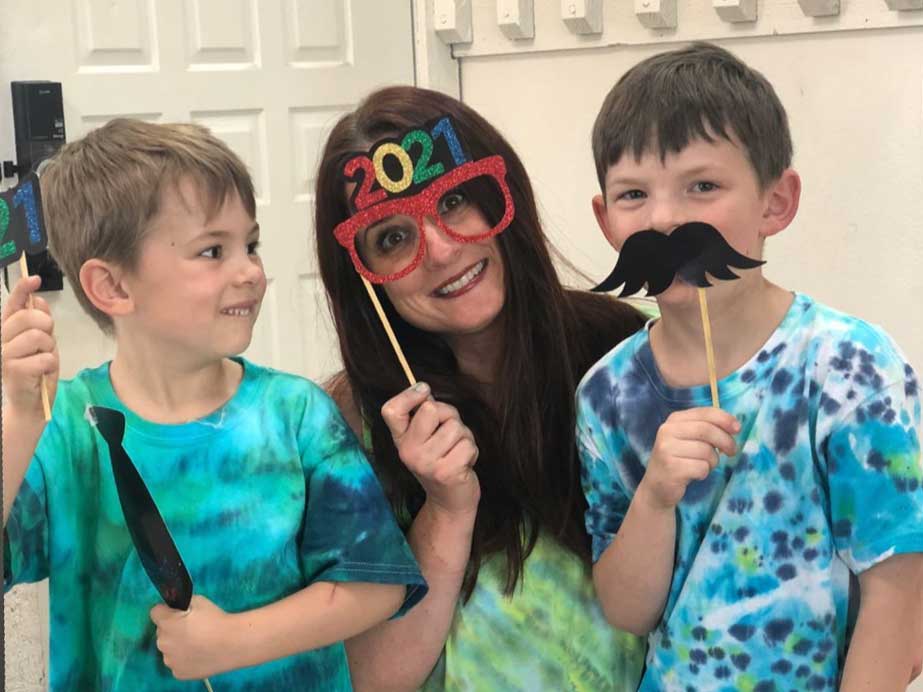
My eight year old son, Noble, stood by our coffee table with the book Overcoming Dyslexia by Sally Shaywitz in his hands.
I wanted to change the subject, to distract him from his current question. Maybe I should pop up off the couch and start doing “spider jumps”. “Spider jumping” is when my kids and I get in the crab crawl position and try to jump. It looks as ridiculous as it sounds.
Four months prior, he had been diagnosed as profoundly dyslexic and I had been waiting to tell him. Overcoming Dyslexia, the irony. Noble continued to curiously look at the book trying to read the cover.
“Mama, I can’t read, can I?”
Noble has the sweetest voice. Listening to it is like looking at a kitten. Noble is also a beautifully sensitive little boy. I had to prescreen Aesop’s Fables to avoid stories of animal deaths. He’s a deep thinker who leans toward worry. Like most mothers, I’m protective of all my children but because of his sensitivity and how hard I had watched him work at reading without success, my heart was a little raw and my instinct to protect was extra.
The hesitation wasn’t embarrassment or shame. It was fear. Fear of his reaction. Fear he would think he was “dumb”. Fear, I wouldn’t be able to help him. Fear, I wouldn’t have the right words.
Words have always been hard for me too. I did well in high school by memorizing, using common sense, and the process of elimination. I can’t remember reading a textbook until I got to college and reading textbooks wasn’t optional if you wanted to pass. Stories I could read, but academic reading was difficult. It would take me so long to read my textbook assignments that I’d just give up. I went from an A student to a C student and lost my academic scholarship. I changed my major to English Literature where the reading was focused on stories not expository text. Whew. Much easier.
Serendipitously, the director of Colorado College’s MAT-Dyslexia Specialist program tested Noble for dyslexia and invited me to apply to the program. I love to learn. It’s one of the reasons I enjoy homeschooling my children. Graduate school had always been something I wanted to do but was afraid of the reading.
“Mama, I can’t read, can I?”
I enrolled in graduate school for reading.
_______
When Noble was five years old, I started teaching him to read. I had spent hours trying to pick the “best” program. Daily, we sat down and do the lessons as scripted but nothing seemed to stick. We preserved and continued going over flashcards, reading word lists, writing letters, playing the games, filling out the worksheets, using the whiteboard, and making letters out of card stock to hang above our homeschool table
As time went on Noble got more and more frustrated. I started to dread our daily lessons. I talked to homeschool friends who said things like:
“Don’t worry about it.”
“All kids learn at a different pace.”
“It will click when he’s ready.”
“They don’t even start teaching kids to read until 8 in Europe.”
One of the reasons we choose to homeschool is to deepen our family relationships. The reading program was having the opposite effect. I was frustrated and so was Noble so I decided “he wasn’t ready” and shelved the program.
Six months later I decided to try again. This time the frustration has lessened but information still wasn’t sticking. Every day felt like we were starting from the beginning. I was concerned but kept moving on through lessons hoping that it would “click”.
It didn’t.
A year later,, we had made it through two levels of our curriculum but he was still struggling to remember the sounds of the letters and reading inconsistently. I had broken up daily lessons into two lessons hoping that would help. I would hold up the A flashcard and he might be able say the short /ǎ/ (as in apple) but he couldn’t remember the other two sounds, /ā/ (as in bacon) and /ä/ (as in wash), the program wanted him to say.
While he struggled with individual sounds and individual words, he could read simple readers out loud to me. It was baffling. Why was remembering sounds and reading individual words so hard but books seemed easier. Shouldn’t it be the opposite? While it seemed easier, his reading “style” was a bit perplexing. One day, he could read a word like green and then the next day he’d read the same word as great. Often, he would change a real word to a non-sense word on the very next page. For instance, he might read frog correctly and the next page he would read it as frep. Another thing I found peculiar was his constant substitution of synonyms that didn’t look anything like the word on the page. For example, he would say things like “town” instead of “city” or “work” instead of “job”. Often the synonyms were significantly harder words such as the time he “read” conquered instead of win. I found it a bit odd but decided he was “such a creative little boy” and my budding little storyteller was just choosing words he liked better. He was being creative, but it wasn’t a choice. It was a coping skill.
I now know that he was guessing. He might recognize the first and last letters of a word and accurately guess one day but the next time the guess would be incorrect. My little guy had been trying really hard but it was too much information, too fast, without enough explanation. Being dyslexic, Noble, needed more explicit instruction than what I was providing. Noble needed to learn to read piece by piece. I had basically dumped a huge box of building bricks on him, gave him a few directions, and hoped he would build a structure that was the literary equivalent to The Empire State building in difficulty.
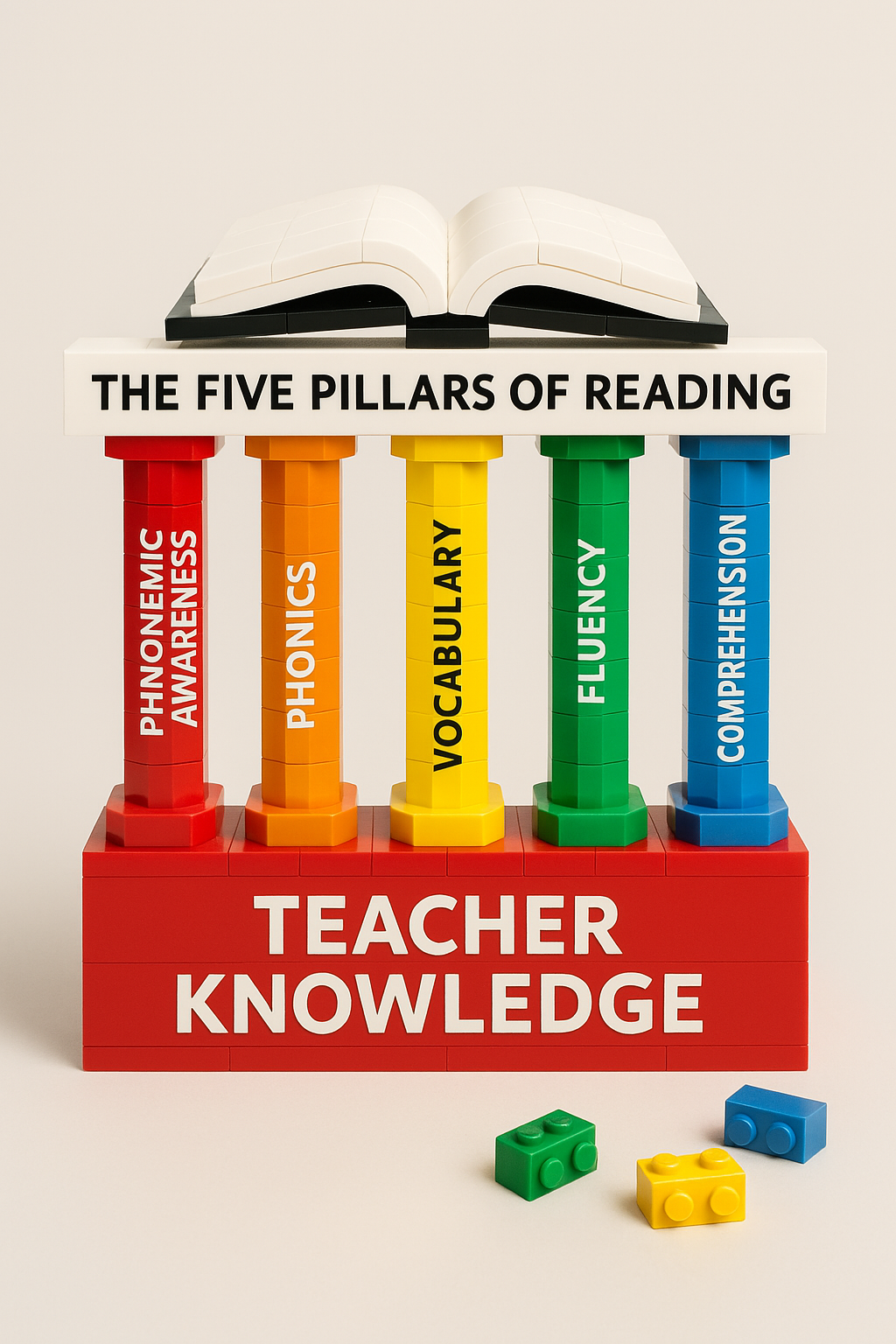
Children with dyslexia need explicit instruction to learn to read. Our program was more or less systematic but it was not explicit enough for a profoundly dyslexic student. I like to think of explicit instruction like building with Legos. Imagine for a moment your child sitting in front of the Lego box wanting to build a house. They may grab a group of two, three, or four Legos that are already stuck together and click those to another group of Legos. Now imagine these Legos represent individual sounds, letters, and concepts. The majority of kids will be able to build a house using chunks of Legos or multiple sounds, letters, and concepts at a time. A dyslexic kid will likely get overwhelmed and may end up frustrated and feeling defeated trying to build with so many blocks. Sounds for each letter and concepts should be taught one at a time and in in a logical or systematic order. These learners need to build brick by brick.
I’d been handing my son too many bricks, too quickly—more than his mind could stack or sort. I had basically dumped a box of building bricks on him hoping he would be able to build a structure with confusing directions.
As he was nearing 8 years old I grew more concerned as he grew more frustrated. I called a friend who said as long as I was using an Orton-Gillingham program he would be fine. I had been using an Orton-Gillingham program and I knew in my heart things were not fine. I finally admitted to myself that I was in over my head and needed to get help.
I scheduled an evaluation. Walking in, I had no idea that my life was about to change. I had no idea that uncovering my son’s learning difference would uncover a new mission for my life.
I understand what it’s like to homeschool a dyslexic child. I understand, the frustrations, the confusion, the worry, the sadness, the fear, the desire to shield them from the world, the hours on the internet searching for answers, the loneliness when other moms are talking about what their kids are reading, and the sacrifice you’re making as a homeschooling mom. I see you. I hear you. I also understand the Science of Reading and I want to help you understand it too so you can make the best possible decisions for your child with the resources you have available.
I know not everyone can afford a private academic language therapist or to go to graduate school to become a dyslexic specialist. I also know that everyone has the right to read regardless financial and school status.
This website is my attempt to come along side you and give you encouragement and education. My hope is that it will serve as a resource on your homeschool journey and help you to teach your child learn to read brick by brick, because I also know the joy of watching my child learn to soar.
Welcome. I’m glad you’re here.